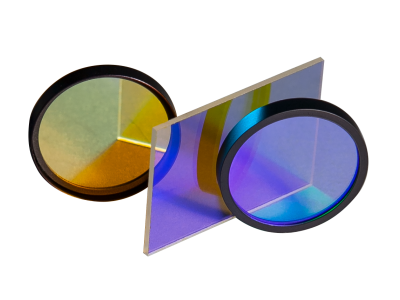
Chroma Photometric Filters – Precision in Bessell, Classic UBVRI and Sloan ugriz
Photometric filters form the basis of all scientific measurements of brightness and colour in astronomy. Chroma Technology offers high-precision filter sets for this purpose, which are precisely calibrated to established photometric systems. They enable reproducible measurements over many years – a crucial advantage for research, observatories and discerning amateur astronomers.
Bessell UBVRI – The modern implementation of the Johnson–Cousins system
The Bessell UBVRI filters correspond to the widely used Bessell interpretation of the classic Johnson–Cousins system.
They are optimised for today’s CCD and CMOS sensors and offer:
- präzise definierte Passbänder
- high transmission
- high transmission
exact colour indices for stars, galaxies and variable objects
This makes them ideal for professional and academic photometry, where modern detectors and consistent data quality are paramount.
Classic UBVRI – Continuity with historical data
The Classic UBVRI filters are based on the original Johnson–Cousins definition and are the preferred choice when:
- high transmission
- time series need to remain comparable over decades
- historical data is to be continued or recalibrated
- long-term studies rely on absolute continuity
They are therefore particularly valuable for projects that need to combine old photometric data with modern instruments.
Sloan ugriz – The digital standard system
The Sloan ugriz filters adhere to the photometric standard of the Sloan Digital Sky Survey (SDSS).
They are specifically designed for digital sensors and offer:
- clearly defined, rectangular passbands
- high reproducibility between instruments
- ideal conditions for precise colour and brightness measurements in large-scale surveys
The ugriz system is now one of the most important standards in digital astronomy – from amateur projects to professional sky surveys.
Why Chroma?
All Chroma photometric filters utilise hard sputter coatings that remain stable over many years and retain their spectral precision even in the face of temperature and humidity fluctuations.
For scientific projects, this means:
- long-term stability
- consistent measurement values
- reliable comparability across instruments and observation periods